
IdentAI: Face Image Acquisition protocol for Forensic Facial Comparison
FACIAL IDENTIFICATION
Facial imaging methods used in human identification include both automated Facial Recognition (FR) systems and Forensic Facial Comparison (FFC). While FR systems rely on black-box algorithms and are not used for positive forensic identification, FFC involves a manual, visual analysis of similarities and differences between facial images, and establishes an identity of the individual[1]. The latter has four main techniques 1) holistic comparison, 2) superimposition, 3) photo-anthropometry, and 4) morphological analysis[2][3]. Since the first three techniques require very strict conditions for their application, only the last one is currently recommended by standards set by the Facial Identification Scientific Working Group (FISWG) in the United States and the Digital Imaging Working Group (DIWG) of ENFSI in Europe.
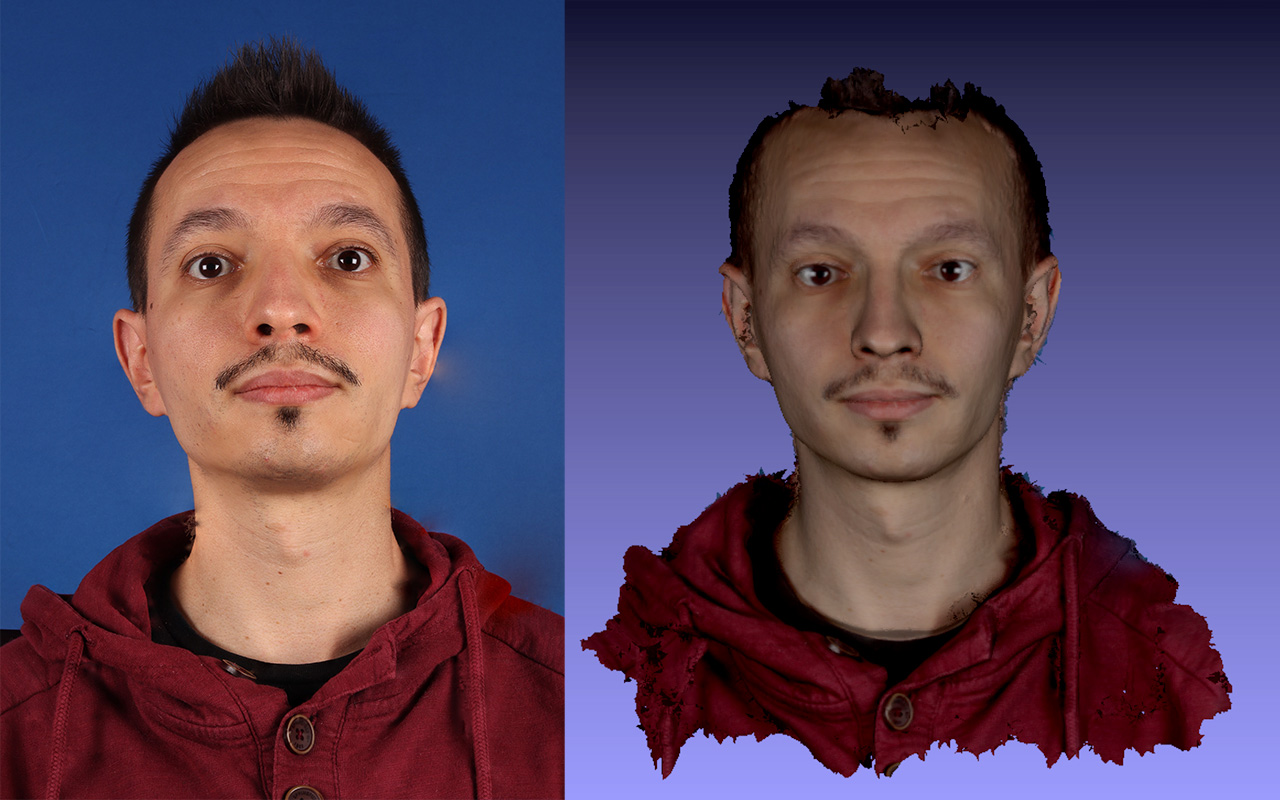
The use of facial image databases is a fundamental resource in supporting both casework and research. However, most available datasets have certain limitations: controlled datasets[4] can lack real-world variability and in-the-wild datasets may miss relevant metadata or consistency. The majority of these datasets contain 2D images in either video or still photos, sometimes both. Some newer datasets contain 3D facial models[5], a type of data that has started to be used by law enforcement in countries like Japan[6] and Switzerland[7].
OUR PROPOSAL
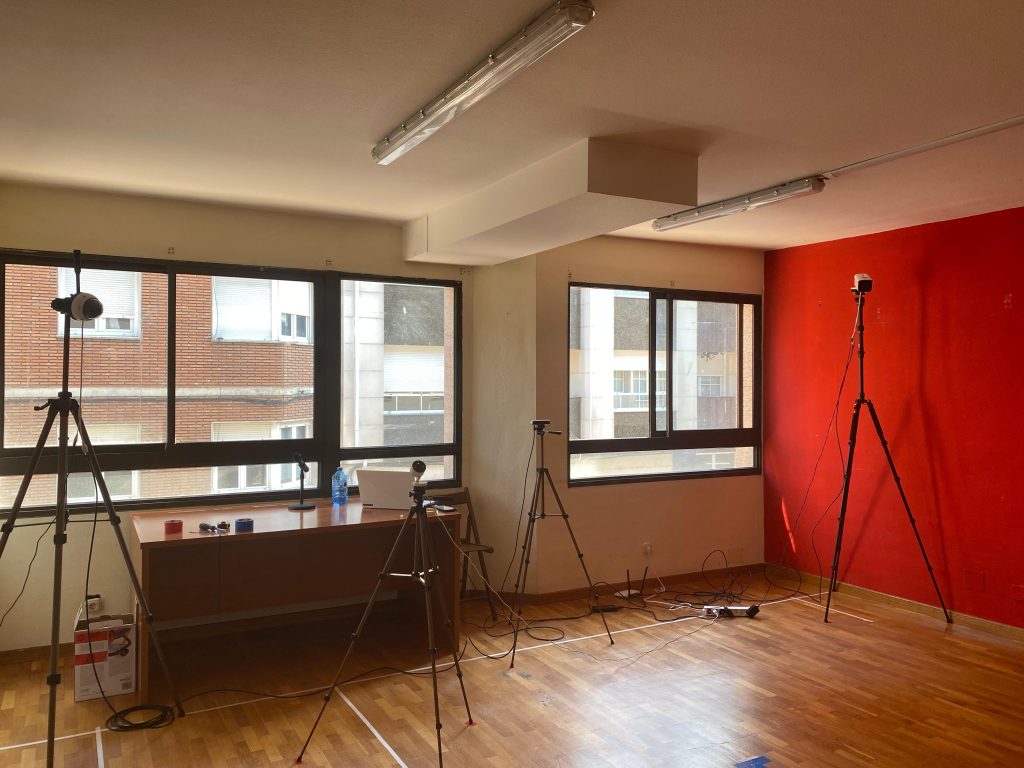
We propose building a setup to gather a more “complete” dataset for FFC, which includes videos from commercial grade-CCTV systems, standardized and in-the-wild photographs/frames, as well as 3D facial models from the same individuals. It incorporates variations in facial expressions, image quality, lighting, pose, resolution, motion blur, and occluding elements, while also collecting relevant metadata such as age, sex, stature, weight, and facial marks. All cameras are calibrated, subject-to-camera distance (SCD) is calculated in all video frames, and an automatic system is used for camera synchronization and frame extraction.
PANACEA’S EXPERTISE AND CONTRIBUTIONS
For this reason, we introduce an outline for a novel setup that captures all three types of , conditions and occlusions; this could support new advances in facial image-related fields, as well as expert training with realistic scenarios. The process of data collection started in October 2024 during the International Association for Craniofacial Identification conference held in Granada at that time. Since then, Standardized facial images, CCTV recordings, and 3D facial models have been collected at varied designated locations, considering interior and exterior locations to represent different illumination factors.
COLLABORATORS
This project was coordinated by experts from Panacea, but with two strong Spanish partners:
- University of Granada–Reviewing and approving the project through their Research Ethics Committee as part of a PhD thesis, and lending the space for the recordings.
- Andalusian Interuniversity Institute in Data Science and Computational Intelligence (DaSCI) –Financing the acquisition of the cameras used for the setup, and lending the space for the recordings.
LOOKING FORWARD
Currently, we are preparing an academic paper detailing the specific steps to recreate this setup. Upon its publication, we will share more in-depth information, such as the type of cameras used and their cost, how exactly they were set up, as well as the code used for syncing them and calculating SCD. Additionally, we will provide information on the ethical committee approval by sharing the informed consent forms, and other available resources for the replication and recreation of this setup.
REFERENCES
[1] N. Bacci, J. G. Davimes, M. Steyn, and N. Briers, ‘Forensic Facial Comparison: Current Status, Limitations, and Future Directions’, Biology, vol. 10, no. 12, p. 1269, Dec. 2021, doi: 10.3390/biology10121269.
[2] FISWG, ‘Facial Comparison Overview and Methodology Guidelines’. 2019. [Online]. Available: https://www.fiswg.org/documents/
[3] ENFSI, ‘Best Practice Manual for Facial Image Comparison’. 2018.
[4] D. S. Ma, J. Correll, and B. Wittenbrink, ‘The Chicago face database: A free stimulus set of faces and norming data’, Behav. Res. Methods, vol. 47, no. 4, pp. 1122–1135, Dec. 2015, doi: 10.3758/s13428-014-0532-5.
[5] P. Urbanová, Z. Ferková, M. Jandová, M. Jurda, D. Černý, and J. Sochor, ‘Introducing the FIDENTIS 3D Face Database’, Anthropol. Rev., vol. 81, no. 2, pp. 202–223, Jun. 2018, doi: 10.2478/anre-2018-0016.
[6] ncavf, ‘Facial Recognition Using 3D Mug Shots — The Future of Forensic Surveillance – ncavf.com’. Accessed: Jan. 14, 2026. [Online]. Available: https://ncavf.com/blog/3d-facial-recognition-video-forensics/
[7] A. Leipner, Z. Obertová, M. Wermuth, M. Thali, T. Ottiker, and T. Sieberth, ‘3D mug shot—3D head models from photogrammetry for forensic identification’, Forensic Sci. Int., vol. 300, pp. 6–12, Jul. 2019, doi: 0.1016/j.forsciint.2019.04.015.
AUTHORS
M. Alejandra Guativonza1,2, Valentino Lugli3, Alejandro Manzanares3, Daniel García Paz1 Enrique Bermejo3,4, Óscar Ibáñez1, 3, 4
1 Faculty of Computer Science, CITIC, University of A Coruña, 15071 La Coruña, Spain
2 Physical Anthropology Lab, Department of Legal Medicine, Toxicology and Physical Anthropology, University of Granada, Granada, Spain
3 Panacea Cooperative Research S. Coop., Ponferrada, Spain
4 Andalusian Research Institute in Data Science and Computational Intelligence, University of Granada, Granada, Spain

M. Alejandra Guativonza
Ph.D. candidate in biomedicine, with a master’s degree in physical and forensic anthropology and a bachelor’s degree in anthropology. Researcher specializing in facial and craniofacial identification methods.